





 Print Article
 Email this Page
Water in Israel/Palestine
Rising Malnutrition Among Palestinians
Like many other things in the region, water is in hot dispute between the Israelis and the Palestinians.
|
The United Nations Food and Agricultural Organization (FAO) today warned of rising hunger and malnutrition among Palestinians living in the West Bank and the Gaza Strip – a situation the agency blamed largely on Israeli polices and practices.
“The total blockade of the West Bank and Gaza Strip has paralyzed the Palestinian economy, which is so vulnerably dependent on Israel and already severely weakened by frequent border closures, to such an extent that it is now in a deep recession, with millions of people severely impoverished and extremely food insecure,” FAO said in a special alert, which was issued in Rome.
Reporting rising levels of malnutrition, the agency cited recent estimates of a 10.4 per cent increase in the incidence of low birth weights and a 52 per cent increase in the still birth rate in the West Bank. Reports also indicate that many homes are now without water and electricity, and what little food the Palestinians have is rotting.
The alert voiced “serious concern” about the on-going large-scale destruction of Palestinian infrastructure – including farm assets such as stores, irrigation systems, greenhouses, water facilities and orchards – as well as the removal of topsoil from an estimated 8,000 hectares of land.
FAO said that by severely restricting Palestinian access to international markets, Israel has become virtually the sole supplier of food to the West Bank and Gaza Strip, with the country accounting for more than 95 per cent of Gaza’s total agricultural imports and almost 100 per cent of its exports. Under those circumstances, the agency pointed out that “border closures have extreme consequences for the food security of the Palestinian people.”
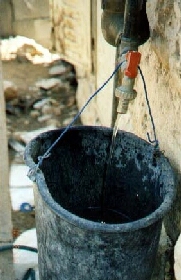
The alert also raises concern over Israel’s confiscation of agricultural land and water resources. According to FAO, freshwater resources available to the West Bank and the Gaza Strip amount to 112 cubic metres per person a year, compared to 377 cubic metres for Israel.
The agency, which has been unable to conduct a long-planned assessment mission to the territories because of security concerns, warned that “all available information points to a major catastrophe under way in the West Bank and Gaza Strip.”
 Back to Top
| Related Articles |
Occupied Salfit: Living in the Stench of Settlers’ Sewage and in the Shadow of the Apartheid Wall |
| Additional Resources |
| Organizations |
| Stay Informed |
|
Sign up for our mailing list and receive an email whenever we post a new article on our news site, Israel-Palestine News. |
This website is printer-friendly. Please Print this article and share it with your friends and family.