| Donate | Contact Us | Materials | Subscribe | Israel-Palestine Timeline | Israel-Palestine News | |
 |
|
A Synopsis of the
|
|||||||||||||||||||||||||||||
 |
|
Synopsis of History & Toll of the Conflict – One-Page Flyer |
For centuries there was no such conflict. In the 19th century the land of Palestine was inhabited by a multicultural population – approximately 86 percent Muslim, 10 percent Christian, and 4 percent Jewish – living in peace.[1]
In the late 1800s a group in Europe decided to colonize this land. Known as Zionists, they represented an extremist minority of the Jewish population. Their goal was to create a Jewish homeland, and they considered locations in Africa and the Americas, before settling on Palestine.[2]
|
|
At first, this immigration created no problems. However, as more and more Zionists immigrated to Palestine – many with the express wish of taking over the land for a Jewish state – the indigenous population became increasingly alarmed. Eventually, fighting broke out, with escalating waves of violence. Hitler's rise to power, combined with Zionist activities to sabotage efforts to place Jewish refugees in western countries[3], led to increased Jewish immigration to Palestine, and conflict grew.
|
|
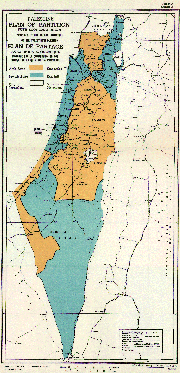
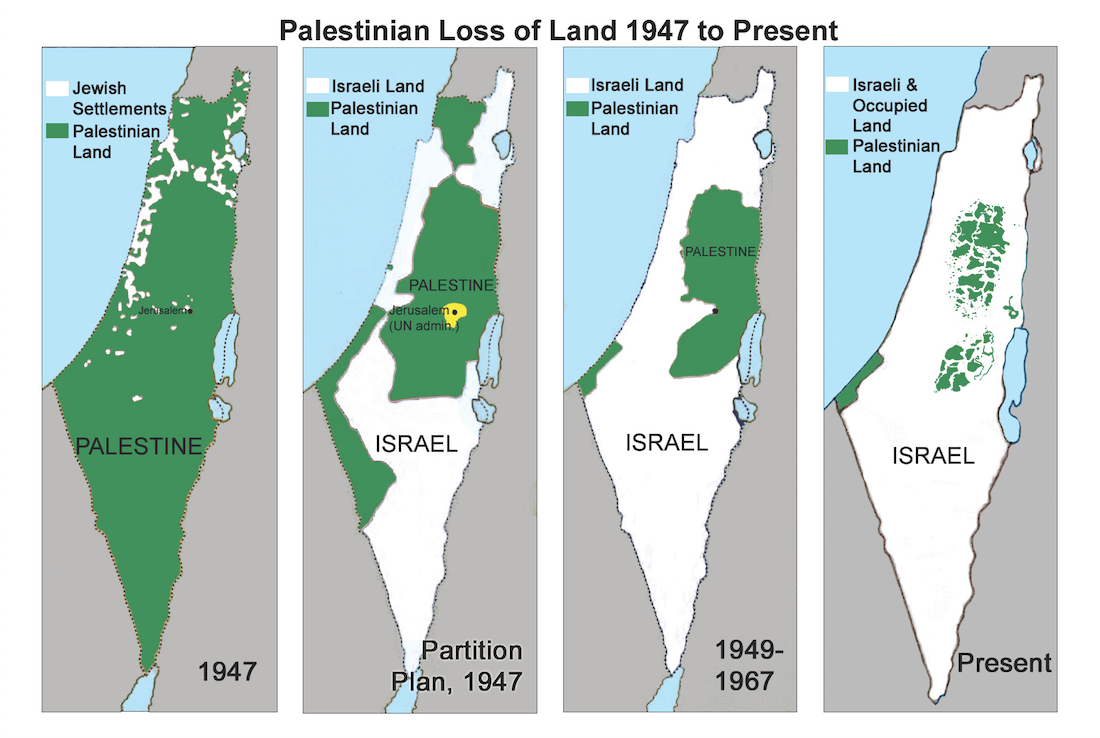
Finally, in 1947 the United Nations decided to intervene. However, rather than adhering to the principle of “self-determination of peoples,” in which the people themselves create their own state and system of government, the UN chose to revert to the medieval strategy whereby an outside power divides up other people’s land. Under considerable Zionist pressure, the UN recommended giving away 55% of Palestine to a Jewish state – despite the fact that this group represented only about 30% of the total population, and owned under 7% of the land.[4]
On May 14, 1948, David Ben-Gurion announced: “We hereby declare the establishment of a Jewish state in Eretz-Israel, to be known as the State of Israel.” The name Israel had been chosen just two days earlier by a 7-3 vote. Most people had assumed the name would be Judea; other contestants were Zion, Ever (the root of the word Hebrew), or simply “the Land of Israel.”
While it is widely reported that the resulting war eventually included five Arab armies, less well known is the fact that throughout this war Zionist forces outnumbered all Arab and Palestinian combatants combined – often by a factor of two to three. Moreover, Arab armies did not invade Israel – virtually all battles were fought on land that was to have been the Palestinian state.
Finally, it is significant to note that Arab armies entered the conflict only after Zionist forces had committed 16 massacres, including the grisly massacre of over 100 men, women, and children at Deir Yassin. Future Israeli Prime Minister Menachem Begin, head of one of the Jewish terrorist groups, described this as “splendid,” and stated: “As in Deir Yassin, so everywhere, we will attack and smite the enemy. God, God, Thou has chosen us for conquest.” Zionist forces committed 33 massacres altogether.[5]
By the end of the war, Israel had conquered 78 percent of Palestine; three-quarters of a million Palestinians had been made refugees; over 500 towns and villages had been obliterated; and a new map was drawn up, in which every city, river and hillock received a new, Hebrew name, as all vestiges of the Palestinian culture were to be erased. For decades Israel denied the existence of this population, former Israeli Prime Minister Golda Meir once saying: “There is no such thing as a Palestinian.”[6]
|
|
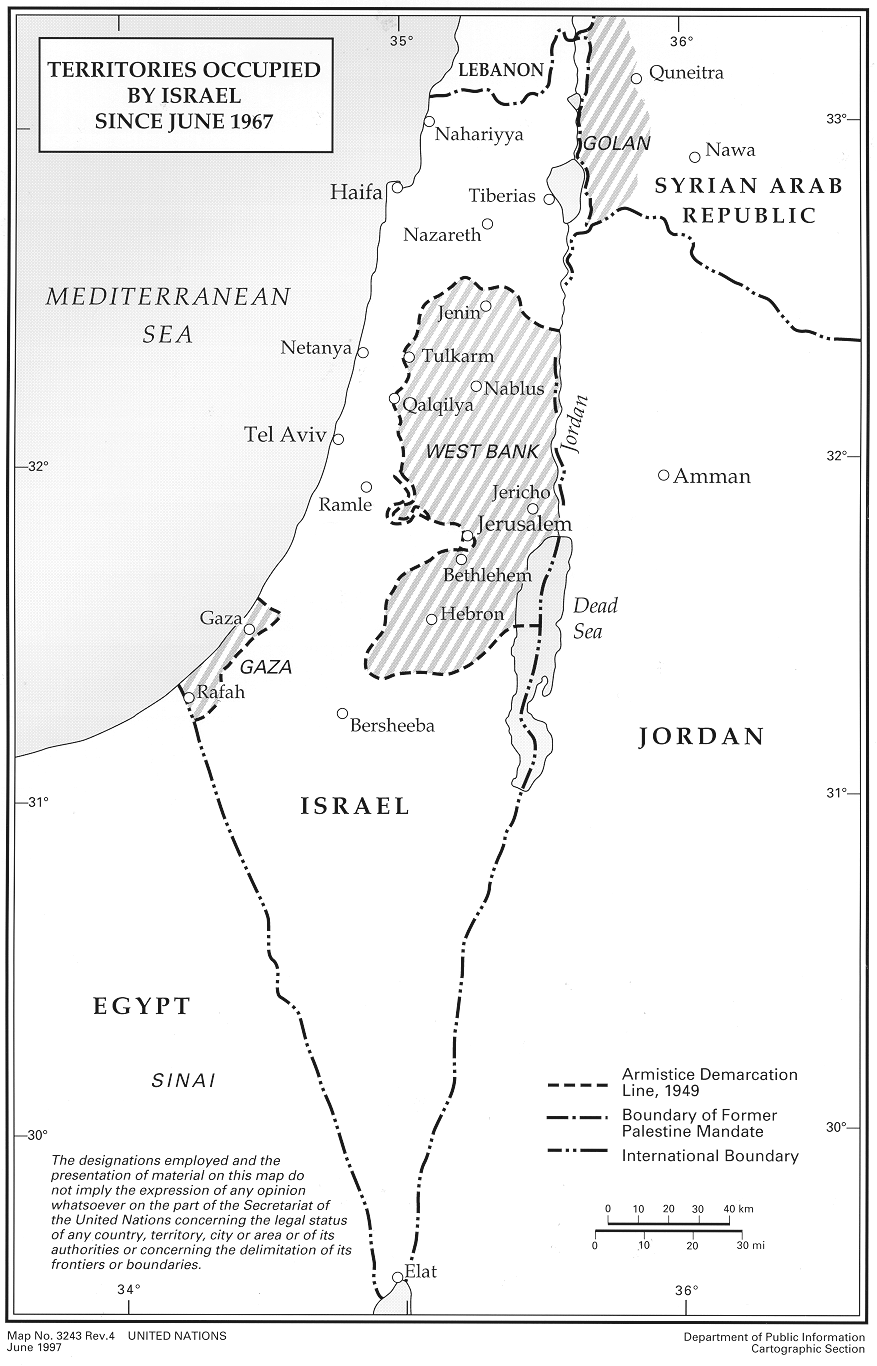
In 1967, Israel conquered still more land. Following the Six Day War, in which Israeli forces launched a highly successful surprise attack on Egypt, Israel occupied the final 22% of Palestine that had eluded it in 1948 – the West Bank and Gaza Strip. Since, according to international law it is inadmissible to acquire territory by war, these are occupied territories and do not belong to Israel. It also occupied parts of Egypt (since returned) and Syria (which remain under occupation).
Also during the Six Day War, Israel attacked a US Navy ship, the USS Liberty, killing and injuring over 200 American servicemen. President Lyndon Johnson recalled rescue flights, saying that he did not want to "embarrass an ally." (In 2004 a high-level commission chaired by Admiral Thomas Moorer, former Chairman of the Joint Chiefs of Staff, found this attack to be “an act of war against the United States,” a fact few news media have reported.)[7]
There are two primary issues at the core of this continuing conflict. First, there is the inevitably destabilizing effect of trying to maintain an ethnically preferential state, particularly when it is largely of foreign origin.[8] The original population of what is now Israel was 96 percent Muslim and Christian, yet, these refugees are prohibited from returning to their homes in the self-described Jewish state (and those within Israel are subjected to systematic discrimination).[9]
Second, Israel's continued military occupation and confiscation of privately owned land in the West Bank, and control over Gaza, are extremely oppressive, with Palestinians having minimal control over their lives.[10] As of Dec. 12, 2022, over 4,700 Palestinian men, women, and children are held in Israeli prisons.[11] Few of them have had a legitimate trial; physical abuse and torture are frequent.[12] Palestinian borders (even internal ones) are controlled by Israeli forces.[13] Periodically men, women, and children are strip searched[14]; people are beaten; women in labor are prevented from reaching hospitals (at times resulting in death)[15]; diverse goods are blocked from entering Gaza, causing a continuing humanitarian crisis. Israeli forces invade almost daily, injuring, kidnapping, and sometimes killing inhabitants.[16]
According to the Oslo peace accords of 1993, these territories were supposed to finally become a Palestinian state. However, after years of Israel continuing to confiscate land and conditions steadily worsening, the Palestinian population rebelled. (The Barak offer, widely reputed to be generous, was anything but.[17]) This uprising, called the "Second Intifada" (Arabic for "shaking off") began at the end of September 2000.
Largely due to special-interest lobbying, U.S. taxpayers give Israel more than $10 million dollars per day, and since its creation have given more U.S. funds to Israel than to any other nation ($150 billion from 1948 through 2021 – approximately $244 billion adjusted for inflation).[18] As Americans learn about how Israel is using their tax money, many from across the political spectrum are calling for an end to this expenditure.
Also see: Against Our Better Judgment: The Hidden History of How the U.S. Was Used to Create Israel

[1] John W. Mulhall, CSP, America and the Founding of Israel: an Investigation of the Morality of America’s Role (Los Angeles: Deshon, 1995), 48; Mike Berry and Greg Philo, Israel and Palestine (Pluto Press, 2006) p. 1; Mazin Qumsiyeh, PhD, author of Sharing the Land of Canaan: Human Rights and the Israeli-Palestinian Struggle, includes a number of population tables in this book, which are available in his booklet, Palestinian Refugees Right to Return and Repatriation (http://ifamericansknew.org/history/ref-qumsiyeh.html); Justin McCarthy, author of The Population of Palestine: Population History and Statistics of the Late Ottoman Period and the Mandate, provides detailed information on population in the excerpt “Palestine’s Population During The Ottoman And The British Mandate Periods.” (http://www.palestineremembered.com/Acre/Palestine-Remembered/Story559.html)
[2] John W. Mulhall, CSP, America and the Founding of Israel: an Investigation of the Morality of America’s Role (Los Angeles: Deshon, 1995),
47-52.
[3] In many places Zionists manipulated local Jewish populations into going to Palestine/Israel, in some cases using subterfuge and terrorism.
Sami Hadawi, Bitter Harvest, p. 37: “Commenting, author Erskine H. Childers, wrote, “one of the most massively important features of the entire Palestine struggle was that Zionism deliberately arranged that the plight of the wretched survivors of Hitlerism should be a ‘moral argument’ which the West had to accept. This was done by seeing to it that Western countries did not open their doors, widely and immediately, to the inmates of the DP. (displaced persons) camps. It is incredible, that so grave and grim a campaign has received so little attention in accounts of the Palestine struggle – it was a campaign that literally shaped all subsequent history. It was done by sabotaging specific Western schemes to admit Jewish DPs.”
A number of authors have discuss Zionist connections with Nazis; for example:
He describes this in greater detail in his book: Ben-Gurion’s Scandals: How the Haganah and the Mossad Eliminated Jews:
“I write this book to tell the American people, and especially the American Jews, that Jews from Islamic lands did not emigrate willingly to Israel; that, to force them to leave, Jews killed Jews; and that, to buy time to confiscate ever more Arab lands, Jews on numerous occasions rejected genuine peace initiatives from their Arab neighbors. I write about what the first prime minister of Israel called ‘cruel Zionism.’ I write about it because I was a part of it.”
[4] United Nations, UN Partition Plan - 1947 (https://www.un.org/unispal/document/auto-insert-208958/)
Walid Khalidi, Revisiting the UNGA Partition Resolution (https://ifamericansknew.org/download/Khalidi-Revisiting-the-1947-UN-Partition-Resolution_Jl-Pal-Studies_1993pdf1.pdf)
United Nations, The Question of Palestine (https://www.un.org/unispal/document/auto-insert-185393/)
[5] Qumsiyeh, Palestinian Refugees Right to Return and Repatriation (http://ifamericansknew.org/history/ref-qumsiyeh.html)
Norman Finkelstein, Image and Reality of the Israel-Palestine Conflict; George W. Ball & Douglas B. Ball, The Passionate Attachment, on p. 29: quotes a message from future prime minister Menachem Begin, head of the Irgun Zionist terrorist group, commending them on the grisly massacre of women, children, and old men at the village of Deir Yassin: “’Accept my congratulations on this splendid act of conquest. Convey my regards to all the commanders and soldiers. We shake your hands. We are all proud of the excellent leadership and the fighting spirit in this great attack. We stand to attention in memory of the slain. We lovingly shake the hands of the wounded. Tell the soldiers: you have made history in Israel with your attack and your conquest. Continue thus until victory. As in Deir Yassin, so everywhere, we will attack and smite the enemy. God, God, Thou has chosen us for conquest.’”
[6] Sunday Times, June 15, 1969, quoted widely.
[7] Donald Neff, The Six Days War, Simon & Schuster
During the Six-Day War, Israel also attacked a US Navy ship, the USS Liberty, killing and injuring over 200 American servicemen. Many analysts believe that the fact that there were no consequences for this attack led Israeli leaders to conclude that they could commit any act of aggression without US complaint. While this attack has largely been covered up in the US media (see “American Media Miss the Boat: For USA Today, Freedom of the Press Means the Right to Report It Wrong” http://ifamericansknew.org/media/misslib.html, Alison Weir, CounterPunch, June 23/24, 2007), it is discussed in a number of books, including James Ennes, The Assault on the Liberty; William Gerhard, Attack on the USS Liberty; Dr. John Borne, The USS Liberty, Dissenting History vs. Official History; Stephen Green , Taking Sides: America’s Secret Relations with a Militant Israel; James Bamford, Body of Secrets; and in a recent article: “New revelations in attack on American spy ship Veterans, documents suggest U.S., Israel didn’t tell full story of deadly ’67 incident,” John Crewdson, Tribune senior correspondent, Chicago Tribune, October 2, 2007 (https://ifamericansknew.org/us_ints/ul-crewdson.html).
Additional information can be found at:
[8] This is touched on in: John V. Whitbeck, “What ‘Israel’s right to exist’ means to Palestinians,” Christian Science Monitor, Feb 2, 2007,
http://www.ifamericansknew.org/cur_sit/rte.html
[9] See, for example, Qumsiyeh, Palestinian Refugees Right to Return and Repatriation (http://ifamericansknew.org/history/ref-qumsiyeh.html)
United Nations Relief and Works Agency for Palestine Refugees in the Near East, http://www.unrwa.org/
[10] For more on the current situation and life under occupation:
http://www.ifamericansknew.org/cur_sit/
http://www.ifamericansknew.org/cur_sit/daily_life-articles.html
[12] See, for example, B’Tselem – The Israeli Information Center for Human Rights in the Occupied Territories, “Absolute Prohibition: The torture and Ill-Treatment of Palestinian Detainees,” May 2007, B'Tselem
Defence for Children International/Palestine Section, http://www.dci-palestine.org/theme/detention
Addameer, Prisoner Support and Human Rights Association, http://www.addameer.org/index.php
Samidoun, Palestinian Prisoner Solidarity Network, http://samidoun.ca/
[14] Israeli Strip Searches: A Partial List, http://www.ifamericansknew.org/cur_sit/strip-searches.html
[17] “Frequently Asked Questions Regarding the Camp David Peace Proposal of July, 2000 and Barak’s so-called Generous Offer,” http://ifamericansknew.org/cur_sit/processfaq.html
https://smile.amazon.com/Truth-About-Camp-David-Collapse/dp/1560256230
| Israel-Palestine Timeline |
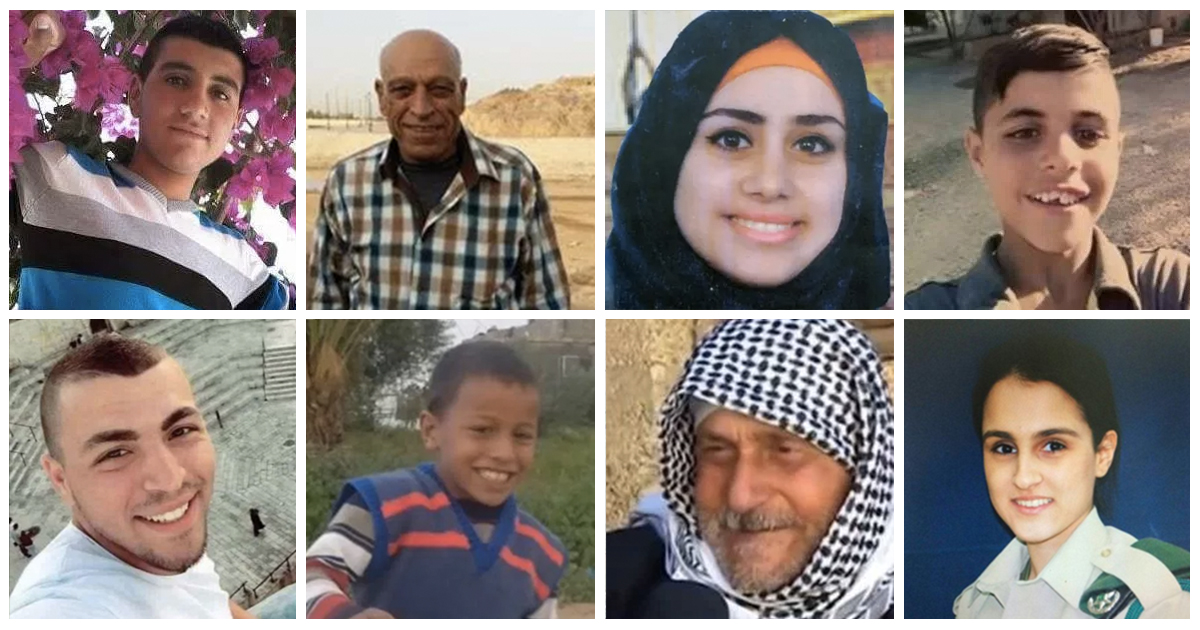 |
Israel-Palestine Timeline: The human cost of the conflict records photos and information for each person who has been killed in the ongoing violence. |
| History of the Israel Lobby |

Buy it on Amazon, and visit the book website for reviews, more ordering options, and upcoming author events. |
| IsraelPalestineNews.org |

Information largely missing from U.S. news reports. Read the Blog |
| The Catastrophe – Al Nakba |
Ethnic Cleansing: How Palestine Became Israel |
| Related Videos |
| Featured Links in This Section |
Living with the Holocaust: The Journey of the Child of Holocaust Survivors |
| Stay Informed |
|
Sign up for our mailing list and receive an email whenever we post a new article on our news site, Israel-Palestine News. |
This website is printer-friendly. Please Print this article and share it with your friends and family.